
Introduction
#nventory accuracy and operational efficiency.
Common Inventory Challenges for Small Businesses
Many small businesses face inventory-related problems that affect profitability and customer experience.
Some common challenges include:
Overstocking products that sell slowly.
Running out of popular items during peak demand.
Manual inventory errors.
Difficulty predicting seasonal demand.
Poor warehouse organization.
Delayed supplier deliveries.
These issues often result in higher costs, lost sales, and reduced customer satisfaction.
How AI Improves Inventory Accuracy
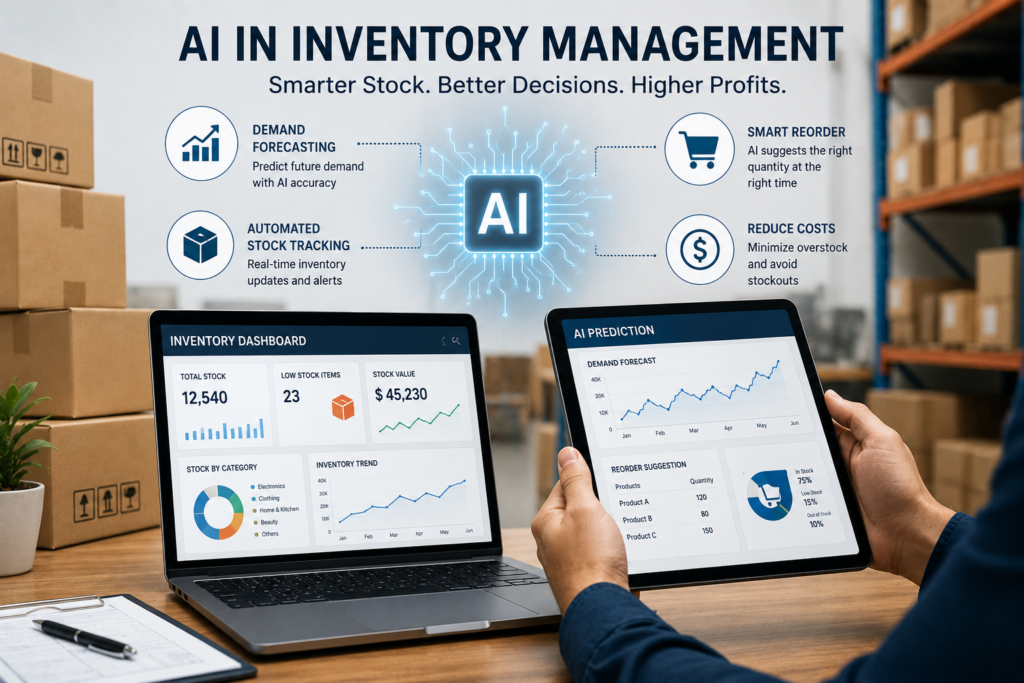
AI systems automatically monitor inventory movements in real time. Every sale, return, or new shipment updates inventory records instantly.
This reduces human errors and ensures inventory data remains accurate. Business owners can quickly identify stock shortages, damaged products, or unusual inventory patterns before they become major problems.
Accurate inventory also improves financial reporting and purchasing decisions.
Demand Forecasting Using AI
One of the biggest advantages of AI inventory management is its ability to predict future demand. AI analyzes historical sales data, seasonal trends, customer buying behavior, holidays, and market changes to estimate how much inventory will be needed.
Accurate demand forecasting helps businesses avoid both stock shortages and unnecessary overstocking. This improves cash flow while ensuring customers can find the products they want.
Reducing Waste and Overstock
Keeping excess inventory increases storage costs and may lead to expired or outdated products. AI helps identify slow-moving items and recommends discounts, promotions, or adjusted purchasing plans.
For businesses selling food, fashion, electronics, or seasonal products, reducing waste can significantly improve profitability.
Saving Time Through Automation
Manual inventory tracking requires constant attention. AI automates repetitive tasks such as updating stock levels, generating inventory reports, creating purchase recommendations, and sending low-stock alerts.
This allows business owners and employees to spend more time serving customers, improving products, and growing the business instead of performing repetitive administrative work.
Industries That Benefit Most
AI inventory management can improve operations across many industries, including:
- Retail stores
- E-commerce businesses
- Grocery shops
- Restaurants
- Pharmacies
- Manufacturing companies
- Wholesale distributors
Businesses of all sizes can benefit from improved inventory visibility and smarter purchasing decisions.
Tips for Getting Started
Small businesses do not need expensive software to begin using AI. Start by identifying inventory challenges, organizing product data, and choosing inventory management software with AI features.
Regularly review inventory reports, monitor product performance, and adjust purchasing strategies based on AI recommendations. As your business grows, AI systems become even more accurate because they learn from additional data.
Conclusion
Artificial intelligence is making inventory management smarter, faster, and more accurate for small businesses. From predicting customer demand to reducing waste and automating daily tasks, AI helps businesses save money while improving customer satisfaction.
As AI technology continues to evolve, businesses that adopt intelligent inventory management solutions will be better prepared for future growth, increased efficiency, and stronger competitiveness in the marketplace.